
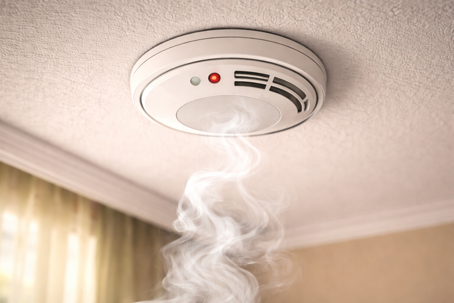
You probably sleep a little easier knowing there is a smoke detector down the hall, but would it really wake your family up in time if a fire started tonight? Many Bradenton homes have at least a couple of alarms, yet we still walk into houses every week where good intentions are undermined by small placement mistakes that leave bedrooms or whole levels underprotected.
In our climate, the AC runs almost all year, ceiling fans spin most of the day, and many homes have vaulted ceilings or open floor plans. All of that changes how smoke moves through your house and how quickly a detector actually senses danger. Understanding where alarms should go in a real Bradenton home, not just on a generic diagram, is one of the simplest ways to get more real protection out of the devices you already own.
We have been working inside homes across Bradenton, Manatee County, and Sarasota County since 1988, handling both electrical and HVAC systems that directly affect how smoke detectors perform. Our licensed, bonded, and insured team works to local and state code on every project, so we see every day what passes inspection, what causes headaches, and where detectors fail in actual fire situations. In this guide, we will share how we think about smoke detector placement in our own neighbors’ homes, and how you can walk your house with the same critical eye.
Why Smoke Detector Placement Matters So Much in Bradenton Homes
Most of us were taught that having smoke detectors is what matters, not exactly where they go. In practice, placement makes the difference between hearing an alarm when smoke first builds in a bedroom doorway versus several minutes later when the hallway finally fills. Smoke from a fire starts as hot gases that rise toward the ceiling, spread out along the nearest flat surface, then move through the paths of least resistance. In a Bradenton house with strong air conditioning and running fans, those paths are rarely straight or predictable.
We often see detectors installed wherever it was easiest to run a wire during construction, not where smoke naturally collects. A unit mounted just outside a bedroom wing, but directly in front of a supply vent, can sit in moving, cooler air that thins out the smoke before it reaches the sensor. In that case, the detector may only sound after smoke has built up far more than anyone would want, especially if bedroom doors are closed at night.
Local building and fire codes set minimum placement requirements to give you basic coverage. They assume average ceiling heights and typical airflow, and they do not automatically account for every vaulted ceiling, open stairwell, or strong return vent. Many older Bradenton homes were built to earlier standards, so they may have a single hall detector doing the work that should be shared by several alarms. We regularly walk into homes from the 1980s or 1990s with only one device on an entire floor, even though the owners think they are covered because it beeps when they hit the test button.
One example is a split-bedroom ranch where the only detector on the bedroom side was mounted in a small alcove with a large return grille above a closet. On paper, there was a detector outside sleeping areas. In reality, that return was constantly pulling fresh air across the ceiling and away from the alarm. A small fire starting in the far bedroom would have filled that room, then the hallway, before enough smoke reached the detector to trigger it. Moving that same device a few feet away from the return improved its chance of catching smoke early, without adding a single new alarm.
Minimum Smoke Detector Locations Every Bradenton Home Should Have
Before you worry about fine tuning placement around vents and fans, start by making sure every space that needs a detector actually has one. For a typical Bradenton home, you want at least one smoke alarm inside every bedroom, one outside each group of bedrooms, and at least one on every level of the house, including finished lofts or enclosed garage apartments. These locations are where people sleep or where smoke is likely to travel quickly between rooms.
Imagine a common single story home in Manatee County with a split bedroom layout. The primary suite is on one side, and two kids’ bedrooms share a hallway on the other. That house should have a detector in each bedroom, plus one in the small hallway serving the kids’ rooms, plus another in or near the main living area. If there is a finished room above the garage, it needs its own alarm too, not just the one on the floor below. If you only see one detector in the center of the house, your coverage is probably not enough.
Two story homes around Bradenton often have an open foyer with stairs and a loft or game room upstairs. Those homes should have alarms upstairs in the loft or hallway and in each upstairs bedroom, plus alarms downstairs near the base of the stairs and in any downstairs bedrooms. A basement is less common here than in other parts of the country, but any finished lower level where people sleep or spend time should have its own detector on that level, not just alarms upstairs.
Codes distinguish between new construction and existing homes, and upgrades are often required when you remodel, pull permits, or add bedrooms. Even if you are not currently required to add more alarms, it still makes sense to match today’s placement standards for your family’s safety. Our team follows local and state building codes on every electrical and HVAC project, so when we are already in your home for equipment upgrades or panel work, we are looking for these placement gaps and can point out where a couple of added detectors would bring you closer to modern expectations.
Ceiling Height, Vents, and Fans: Getting the Exact Spot Right
Once you know which rooms need detectors, the next step is deciding exactly where on the ceiling or wall to put them. Smoke likes to collect near the highest, relatively still air it can find, which is usually near the center of a flat ceiling, a short distance away from corners and wall junctions. Most manufacturers recommend placing alarms at least a certain number of inches away from the nearest wall to avoid the dead air pocket where air does not move well right at the edge.
In Bradenton, many homes have vaulted or cathedral ceilings in living rooms and sometimes in primary suites. When a ceiling peaks very high, hot smoke can rise and create a layer well below the absolute peak, especially when cooler air from the AC is circulating. In those spaces, it is often better to mount the detector along the slope of the ceiling, a short distance down from the highest point, rather than right on the peak where layers of air can separate. This helps the sensor sit in the path where smoke is more likely to flow first.
HVAC vents and ceiling fans change the picture quite a bit. A detector mounted directly next to a supply vent may sit in a stream of relatively cool, fast moving air that keeps smoke away from the sensor. A unit placed directly under a return grille or in the wash of a ceiling fan can also see diluted smoke and respond slower than expected. As a rule of thumb, avoid putting detectors right next to vents or directly in the center of a fan’s airflow. Shifting the alarm a couple of feet away from these strong air currents typically gives smoke a better chance to reach it quickly.
We see this interaction during our HVAC work every day. Our technicians are trained to look at vent layout and fan placement when they consider where a smoke alarm should go. In a small Bradenton bedroom with a supply vent over the doorway and a fan in the center of the room, for example, a good spot for a detector might be on the ceiling away from the fan and several feet off the vent’s direct path, or high on the wall if ceiling mounting would put it in strong airflow. The goal is to place the sensor where smoke naturally collects, not in the most convenient place to run wire.
Using a few simple rules, you can stand in each room and ask yourself, “If smoke rose from that outlet, or that nightstand, where would it pool first on this ceiling?” Then confirm that your detector is located in that pool, not right under a fan blade or in an AC blast. That small bit of thinking can make your existing detectors far more effective without any extra equipment.
Avoiding False Alarms Near Kitchens, Garages, and Bathrooms
False alarms are one of the main reasons people disable or remove smoke detectors, which leaves them unprotected when a real fire happens. The most common trouble spots are near kitchens, garage doors, and bathrooms. In those areas, everyday activities like cooking, showering, or starting a car can produce steam, small amounts of smoke, or exhaust that certain detectors will read as a fire if they are mounted too close.
A detector installed inside a small Bradenton kitchen, especially near the stove, is likely to sound off regularly during normal cooking. Steam from pots, small amounts of cooking smoke, and airborne particles can all confuse some sensors. A better approach is to install a detector just outside the kitchen, in the nearby hallway or open living area, positioned so it still has a straight path to smoke in a real kitchen fire but is not in the direct line of every cooking plume. Keeping it a reasonable distance away from the stove area helps reduce nuisance trips.
Bathrooms create a different problem. Hot showers release lots of steam, which can travel down hallways or through open doors and trigger alarms that sit directly outside bathroom doors or in small adjacent alcoves. If you have a detector that seems to go off whenever someone showers, look at how close it sits to the bathroom doorway and whether ventilation fans push steam right toward it. Relocating that alarm a short distance away along the hallway ceiling, while still covering bedrooms, usually reduces false alarms without reducing safety.
Attached garages deserve special attention in Bradenton because many homes use them for storage, hobbies, or even partial living space. Exhaust fumes, dust, and temperature swings are all hard on standard smoke detectors. In many cases, code expects a detector near the door between the house and garage, but not necessarily in the garage itself unless it is finished living space. Placing an alarm just inside the house side of that door, and not in the path of car exhaust when the door opens, helps catch smoke from a garage fire without constant nuisance alerts from exhaust.
The type of detector you use in these edge locations matters too. Ionization detectors tend to respond quickly to very small particles, which can make them more prone to cooking related false alarms. Photoelectric detectors are often better with slow, smoldering fires and may behave better around everyday kitchen use. Combination units are widely available and can give broader coverage, but they still need smart placement. When our technicians get calls about a too sensitive detector, we often find there is nothing wrong with the device itself. The problem is where it is mounted. A small relocation away from a bathroom door, stove line, or garage opening fixes more issues than a full replacement, which is why we focus on root cause rather than just swapping equipment.
Hardwired, Interconnected, and Smart Detectors: Placement Still Matters
Many newer homes in Bradenton, and older homes that have been updated, have hardwired, interconnected smoke detectors. Interconnection means that when one alarm senses smoke, every alarm on that circuit sounds. This is especially valuable in multi level homes, because a fire starting in a downstairs room can wake someone sleeping upstairs even if the smoke has not yet reached the upper floor. However, interconnection does not remove the need for good placement in each space.
In a typical hardwired setup we see around Manatee and Sarasota counties, the electrician who wired the house during construction chose detector locations partly based on convenience. They tied alarms into the nearest power source, sometimes in hallway junction boxes or wherever they could easily run cable. That can leave alarms just a bit too far from bedroom doors, too close to returns, or lined up with fans simply because those were the easy spots. When we open ceilings for HVAC work or panel upgrades, we often find detectors that meet bare minimums but leave obvious blind spots that a few thoughtful moves could fix.
Smart detectors add another layer, with app notifications, self tests, and sometimes the ability to distinguish between types of smoke. These features can be helpful, especially if you are away from your Bradenton home often, but they do not change the physics of smoke movement. A smart detector that sits in the wrong place relative to vents, fans, and doorways will still get the wrong information. You will just get that wrong information on your phone instead of only through the siren.
Because our team is fully licensed, bonded, and insured for electrical work, we regularly install and relocate hardwired and smart alarms when we are already working on circuits for HVAC equipment, panels, or lighting. We look at the whole picture: where bedrooms are, where air returns and supplies sit, how high the ceilings are, and how an interconnected system will behave during an emergency. That approach helps each individual detector sit in a place where it can do its job, and the network of alarms give you the time you need to react.
If you have an older hardwired system that you suspect is not placed well, it is worth getting a professional opinion before you assume you need to replace every device. Often, we can reuse existing wiring runs, add one or two new alarms where they are clearly missing, and shift others slightly to get a much safer layout without tearing your home apart or overspending on equipment.
Common Smoke Detector Mistakes We See in Bradenton Houses
After decades of working in Bradenton area homes, we see the same smoke detector mistakes again and again. One of the most common is relying on a single detector for an entire bedroom wing. For example, three bedrooms might share one hallway, but there is only one alarm mounted at one end of that hallway. If the far bedroom door is closed, smoke from a fire inside that room must fill the bedroom, seep under or around the door, and travel the full length of the hall before reaching the detector. That path takes time you do not want to lose at night.
Another frequent issue is placing alarms directly under ceiling fans or immediately next to supply vents. In many Bradenton bedrooms, the fan sits in the exact center of the room and the builder put the detector right beside it for symmetry. The fan’s downdraft and sideways airflow can push smoke away from the sensor or keep layers of air from settling near it. The same happens when a supply vent dumps cool air right across the ceiling by the alarm. Shifting the device a foot or two away from those strong air currents makes a real difference in how quickly it sees rising smoke.
We also see missing or poorly placed detectors around converted spaces. A garage that has been turned into a bedroom or bonus room, or an enclosed lanai that is now living space, often ends up without its own alarm. Homeowners assume the nearest unit inside the main house is enough. In reality, that new room may have a slightly different ceiling height, different airflow, and a door that can stay shut for long stretches. It needs a detector inside the space, mounted according to the same guidelines you use for any bedroom.
To make this more concrete, use a simple checklist as you walk your home. First, check that every bedroom has a smoke detector inside, mounted on the ceiling or high on the wall. Second, look for an alarm in any hallway or loft that connects bedrooms, and make sure there is at least one on every level, including finished garage or bonus rooms. Third, look at each detector’s surroundings. If you see a fan, vent, bathroom door, or kitchen entrance within a short distance, ask whether the alarm is sitting directly in that airflow or in the line of everyday steam or cooking smoke.
Our technicians are trained to think this way in every home, not just when someone calls specifically about alarms. We take a problem solving approach because we know that adding one detector or moving another a short distance can be more valuable than simply replacing what is already there. When we share these patterns with homeowners, many are surprised to realize how easy it is to spot and fix at least the most obvious issues.
When to Call a Pro for Smoke Detector Placement in Bradenton
There are parts of smoke detector placement that many Bradenton homeowners can handle on their own. If you are replacing a battery only alarm in the same location, or swapping out an old unit for a modern one without moving it, that is usually a straightforward job if you follow the manufacturer’s instructions. You can also use the room by room checklist to identify clear problems, such as a missing bedroom detector or a unit obviously too close to a bathroom door, and plan where new battery only devices should go.
Once you get into moving or adding hardwired and interconnected alarms, or changing layout as part of a remodel or HVAC upgrade, it makes sense to bring in a licensed electrician. Running new cable, tying into existing circuits, patching ceilings, and testing interconnection are not minor jobs. There are also code requirements about how alarms must be powered and interconnected that are easy to overlook if you are not working with them every day. When you are selling your home, pulling permits for renovations, or adding a new bedroom, inspectors may look closely at your alarm setup. Having a professional design and install any changes helps you avoid surprises at that stage.
We find that good times to review detector placement include replacing your AC system, updating your electrical panel, or renovating bedrooms and living areas. Our technicians work on salary, not commission, so when we are already in your home for HVAC or electrical work, we can give a straightforward assessment of your current setup. If everything looks solid, we say so. If we see obvious gaps, we can walk you through which changes would give you the most safety benefit for the least cost, rather than pushing a full house replacement.
At Anthony's Cooling-Heating-Electrical, our philosophy is simple. You do not need new until we say you do. That applies just as much to smoke detectors as it does to air conditioners. Sometimes the right answer is a new, interconnected system. Other times, it is a couple of added alarms and a few smart relocations that work with your home’s airflow and layout instead of against it.
Get Confident About Smoke Detector Placement in Your Bradenton Home
The detectors on your ceiling do the most good when they are in the right rooms and in the right spots within those rooms. A short walk through your Bradenton home with a more critical eye, paying attention to bedrooms, hallways, ceiling height, vents, and fans, can reveal simple improvements that give your family more time to react in a fire. The devices you already own may be enough, but they need to be placed where smoke will actually reach them first, not just where a builder or DIY installer found it easiest to mount them.
If you spot missing alarms, questionable locations near bathrooms or kitchens, or hardwired detectors that do not seem to cover your current layout, we can walk through your options with you. We can review placement during a routine HVAC or electrical visit, or schedule a dedicated look at your system, and then handle any wiring changes, relocations, or upgrades you decide make sense. Our goal is the same as yours, to help make sure the people in your home get as much warning as possible if a fire ever starts.