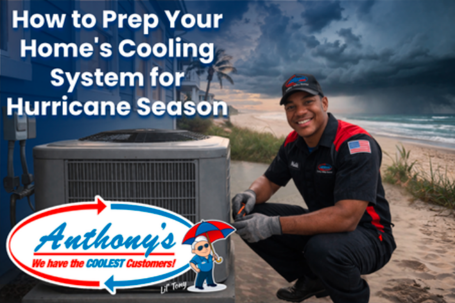
Florida's storm season doesn't wait — and neither should your HVAC. Here's exactly what to do before June 1st to protect your system, your home, and your family.
Every year in Southwest Florida, we see the same thing happen. Homeowners spend weeks stocking up on water, flashlights, and canned goods — and then completely forget about the one system that keeps their family comfortable and safe through the heat and humidity of storm season: their air conditioner.
At Anthony's Cooling, Heating & Electrical, we've been serving Palmetto, Bradenton, Sarasota, and Manatee County for years. We know what Florida storms do to HVAC systems — and more importantly, we know how to make sure yours survives the season without skipping a beat. Here's your complete guide to prepping your home's cooling system before hurricane season hits.
Why hurricane season is hard on your AC
It's not just the storm itself that causes damage. Florida's rainy season brings a perfect storm of threats to your HVAC system — high winds, power surges, flooding, flying debris, and extended periods of extreme heat and humidity that push your equipment to its limits.
Power surges from lightning strikes can fry your compressor or circuit board in an instant. Wind-driven debris can damage your outdoor condenser fins or fan blades. Flooding can reach electrical components if your unit sits low to the ground. And when the power comes back on after an outage, the sudden surge can strain a system that was already working overtime before the storm hit. The good news? Almost all of this is preventable with the right preparation.
Step 1: Schedule a pre-season AC tune-up
This is the most important thing you can do — and the one most homeowners skip. A professional HVAC tune-up before hurricane season ensures your system is running at peak efficiency before it faces its toughest months. Anthony's technicians will check refrigerant levels, clean the coils, inspect electrical connections, test the thermostat, lubricate moving parts, and flag any components that are on the verge of failing.
Think of it like getting your car serviced before a long road trip. You wouldn't drive from Palmetto to Tampa in August without checking your oil — don't run your AC through hurricane season without a professional once-over either.
Anthony's tip: A dirty or poorly maintained AC system works harder, runs longer, and costs more to operate — and it's far more likely to break down during the hottest, most stressful days of the year. Book your tune-up in May before our schedule fills up for the season.
Step 2: Clean your condenser — especially after a storm
Your outdoor condenser unit sits outside year-round, collecting dirt, pollen, leaves, and grime. That buildup restricts airflow and forces your system to work significantly harder to cool your home. But hurricane season adds another layer — storms drive debris deep into your condenser coils in ways everyday dust simply doesn't.
A thorough condenser cleaning before the season starts — and again after any significant storm — restores proper airflow, improves energy efficiency, and reduces wear on your compressor, which is the most expensive component in your entire system. Don't wait until your system is struggling to get it done.
Anthony's is currently offering $50 off a thorough condenser cleaning with code Thorough426. There's no better time to get ahead of it.
Step 3: Protect your system from power surges
Lightning and power surges are responsible for a staggering number of AC compressor failures across Florida every single storm season. The good news is that this type of damage is almost entirely preventable — if you have the right protection in place before the storms arrive.
A complete surge protection setup for your HVAC system has three key layers:
- Whole-home surge protector — Installed at your electrical panel by a licensed electrician, this is your first line of defense. It shields your HVAC system and all major appliances from the large voltage spikes that come with nearby lightning strikes and grid fluctuations.
- Disconnect surge protector — Installed at the outdoor disconnect box next to your condenser unit, this provides a second layer of protection specifically for your AC system at the point where it connects to your home's electrical supply.
- Low-voltage surge protector — This protects the sensitive control board and thermostat wiring inside your system — the components most likely to be damaged by smaller, repeated voltage fluctuations that a whole-home protector alone may not catch.
Pro tip: Most homeowners only have one layer of surge protection — or none at all. A full three-layer setup is the only way to truly protect your investment from Florida's lightning-heavy storm season. Ask us about all three when you call. This is exactly what Anthony's Florida Storm Package is designed to address. Built specifically for Gulf Coast homeowners, it covers surge protection at every level, a full system inspection, and the peace of mind that your equipment is protected before the first storm of the season. It's one of the smartest investments you can make in your home before June 1st.
Step 4: Secure and clear around your outdoor unit
Before a storm, take a walk around your outdoor condenser unit and do a quick visual check. Trim back any shrubs or branches within two feet of the unit — in high winds, these become dangerous projectiles that can damage your condenser fins and coil. Remove any loose items nearby that could blow into the unit during the storm.
If a storm is in the forecast, turn your system off at both the thermostat and the breaker before it arrives. Do not cover your condenser with a tarp during a storm — this traps moisture and can cause more damage than the storm itself. Once the storm has passed and you've confirmed there's no visible damage, you can safely restart your system.
Step 5: Replace your air filter and maintain your condensate drain
A clogged air filter is one of the most common — and most easily preventable — causes of AC breakdowns during the high-demand months of June through September. Before storm season begins, swap in a fresh filter that's rated for your system. If you have pets or allergies, consider stepping up to a higher-MERV filter for better air quality through the humid summer months.
Just as important is keeping your condensate drain line clear. This is the line that removes moisture your AC pulls from the air — and in Florida's humidity, it works overtime. A clogged drain line causes water to back up into your air handler, leading to water damage, mold growth, and system shutdowns.
Easy monthly maintenance tip from our technicians: Once a month during storm season, pour one gallon of hot tap water mixed with a small amount of Dawn dish soap down your condensate drain line. This simple habit breaks up buildup before it has a chance to cause a clog — and it costs almost nothing to do. If you notice water pooling at the base of your indoor air handler, call Anthony's right away. A quick service visit can clear the drain before it becomes a much bigger and more expensive problem.
Step 6: Consider a whole-home backup power solution
Even the best-maintained AC system can't run without electricity. Florida power outages after major storms can last anywhere from a few hours to several days — and in the summer heat and humidity, that's not just uncomfortable. For elderly family members, young children, or anyone with a medical condition, it can be genuinely dangerous.
A Generac whole-home standby generator connects to your natural gas or propane line and turns on automatically within seconds of a power outage — keeping your AC, refrigerator, lights, and medical equipment running without you having to lift a finger. There are no fuel runs, no manual startup, and no waiting in the dark hoping the grid comes back on.
Anthony's is an authorized Generac dealer and is currently offering up to $2,000 off generator installation with a free in-home estimate. We recommend scheduling your estimate in April, May, or June — before hurricane season is in full swing and installation wait times stretch out. Pairing a storm-ready HVAC system with a Generac generator is the complete home protection package for Florida homeowners.
Your hurricane season HVAC checklist
Task | When | Done? |
Schedule professional AC tune-up | May — before season | |
Book thorough condenser cleaning | After each storm | |
Install whole-home surge protector, disconnect, and low-volt protection | May — before season | |
Ask about the Florida Storm Package | May — before season | |
Replace air filter | Monthly during season | |
Treat condensate drain with hot water and Dawn dish soap | Monthly during season | |
Trim vegetation around outdoor unit | Before each storm & monthly | |
Turn system off at the breaker before storm arrives | Before each storm | |
Inspect unit after storm passes | After each storm | |
Schedule free Generac estimate | April, May, or June | |
What to do after a storm
Once it's safe to go outside, do a thorough visual inspection of your outdoor condenser before restarting your system. Look for visible dents, bent fins, debris inside or around the unit, or any signs of flooding at the base. If everything looks clear, turn the breaker back on, wait 30 minutes to allow the system pressure to normalize, then switch your thermostat back to cool.
If you notice any damage, hear unusual sounds, or find that your system isn't cooling properly after the storm, call Anthony's right away. We prioritize storm-related service calls for customers throughout Manatee and Sarasota County and are fully equipped to diagnose and repair storm damage quickly — so your family can get back to comfortable as fast as possible.
You don't need new until we say you do. That's our promise at Anthony's. We'll always give you an honest assessment of your system — whether that's a simple repair, a seasonal tune-up, or a recommendation to replace. No upselling. No pressure. Just straight talk from people who know HVAC.
Don't wait until the first storm warning
The time to prep your cooling system is right now — in May, before the peak summer heat arrives and before hurricane season officially kicks off on June 1st. Once a named storm is in the forecast, our phones light up and our schedule fills fast. The homeowners who act early are the ones who go into storm season feeling confident, protected, and comfortable.
Anthony's Cooling, Heating & Electrical is your trusted local HVAC and electrical partner for hurricane season preparation in Palmetto, Bradenton, Parrish, Ellenton, Sarasota, and all of Manatee and Sarasota County. From AC tune-ups and condenser cleaning to surge protection, storm packages, and Generac generator installation — we have everything you need to get ready before the season starts.
Call us today at (941) 347-0779 or visit AnthonysAirConditioning.com Schedule your pre-season tune-up, ask about the Florida Storm Package, or book your free Generac estimate — all in one call.